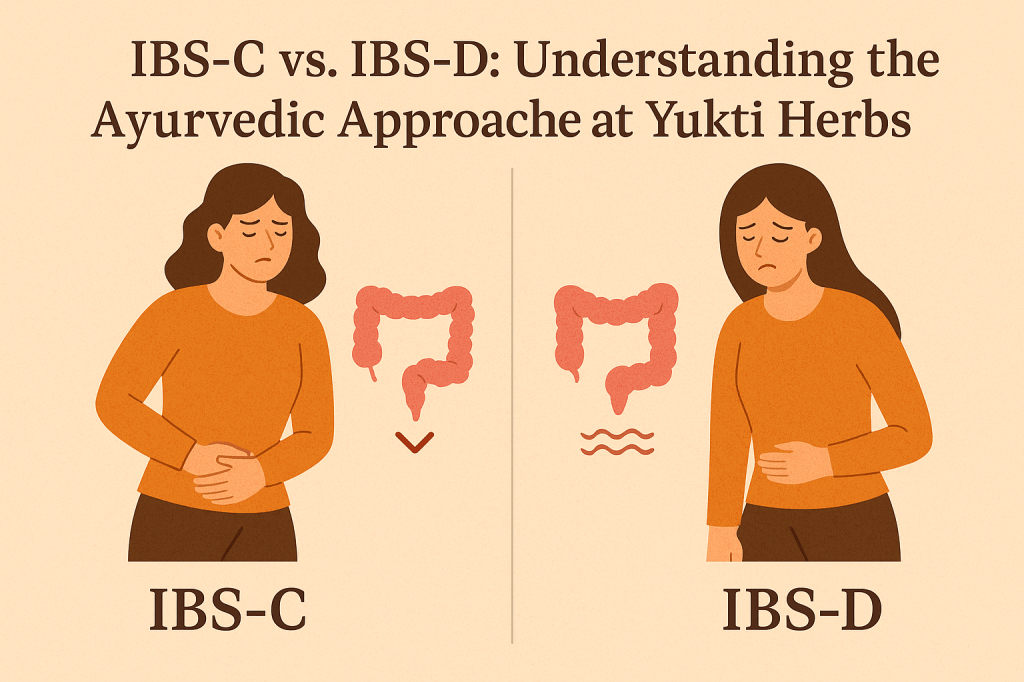
Irritable Bowel Syndrome (IBS) is a common, often perplexing, digestive disorder. While its hallmark symptoms — abdominal pain, discomfort, and altered bowel habits — are universal, IBS manifests in distinct subtypes: IBS with Constipation (IBS-C) and IBS with Diarrhea (IBS-D). Understanding these differences from an Ayurvedic perspective is crucial for effective and lasting relief.
At Yukti Herbs – Multispecialty Ayurveda & Panchakarma Hospital, our MD, PhD Qualified experienced Ayurvedic doctors delve deep into your unique constitution (Prakriti) and the specific Dosha imbalances (Vikriti) driving your IBS, offering personalized Ayurvedic treatment for IBS that targets the root cause of your symptoms.
IBS-C: The Vata Imbalance and Impaired Apana Vayu
IBS-C is predominantly characterized by:
- Infrequent, hard, lumpy stools
- Straining during bowel movements
- Abdominal pain often relieved by passing stool
- Bloating and gas
From an Ayurvedic standpoint, IBS-C is primarily a Vata Dosha imbalance, particularly affecting Apana Vayu, the subtype of Vata that governs downward movements, including elimination. When Vata, with its cold, dry, and erratic qualities, is aggravated in the colon (Pakwashaya), it leads to dryness, stagnation, and impaired motility. This also indicates a weakened Agni (digestive fire), leading to the accumulation of Ama (toxins).
Ayurvedic Approach for IBS-C at Yukti Herbs:
The focus for IBS-C is to pacify Vata, strengthen Agni, and promote healthy elimination.
- Dietary Adjustments:
- Embrace: Warm, cooked, unctuous (with healthy fats like cow’s ghee), moist, and grounding foods. Plenty of warm water and herbal teas. Soluble fibers from oats, psyllium husk, ripe bananas, cooked carrots, and zucchini.
- Avoid/Limit: Cold, raw, dry, processed, and excessively light foods. Excessive intake of cold beverages. Foods that aggravate Vata like raw salads, cold dairy, and certain beans without proper preparation.
- Herbal Medicines (AYUSH GMP Approved, In-house Manufacturing):
- Herbs like Triphala (in specific formulations), Isabgol, Haritaki, Erand (Castor oil in therapeutic doses), and Ginger are often prescribed to gently stimulate bowel movements, remove Ama, and kindle Agni. Our in-house manufacturing ensures the purity and potency of these clinically tested remedies.
- Panchakarma Therapies (Best in Class, Hygienic & Safe):
- Basti (Medicated Enema): Considered the most effective treatment for Vata imbalances, especially beneficial for IBS-C. Various types of medicated oil or decoction basti are administered to nourish the colon, soften stools, and regulate Apana Vayu. Research supports its efficacy in improving bowel consistency and reducing bloating in IBS-C patients.
- Snehana (Oleation): Both internal (ingesting medicated ghee) and external (oil massage) oleation help to lubricate the dry colon and calm Vata.
- Abhyanga (Warm Oil Massage): Calms the nervous system and improves gut motility.
- Lifestyle & Stress Management: Regular routines, adequate sleep, gentle yoga postures (like Pawanmuktasana), and stress-reducing practices (meditation, Pranayama) are crucial, as stress significantly impacts Vata.
IBS-D: The Pitta (and sometimes Vata) Imbalance
IBS-D is typically characterized by:
- Frequent, loose, watery stools
- Abdominal cramping, often urgent
- Mucus in stool
- Burning sensation, sometimes accompanied by acidity or excessive thirst
Ayurvedically, IBS-D is often linked to an aggravation of Pitta Dosha, making Agni excessively sharp or volatile. This leads to increased metabolism and rapid transit time in the gut. In some cases, aggravated Vata can also drive the frequent, erratic movements. The presence of Ama is also a contributing factor, leading to inflammatory responses.
Ayurvedic Approach for IBS-D at Yukti Herbs:
The treatment for IBS-D focuses on pacifying Pitta, cooling inflammation, normalizing gut motility, and strengthening the digestive lining.
- Dietary Adjustments:
- Embrace: Cooling, nourishing, and easily digestible foods. Rice, green gram, cooked vegetables like bottle gourd, and pomegranate. Buttermilk (Takra), which is considered a natural probiotic and an excellent digestive aid, is often emphasized.
- Avoid/Limit: Spicy, acidic, fried, and excessively hot foods. Excessive caffeine, alcohol, and fermented foods. Raw foods that are difficult to digest.
- Herbal Medicines (AYUSH GMP Approved, In-house Manufacturing):
- Herbs like Kutaja (for its astringent and anti-diarrheal properties), Bilva (wood apple, for soothing the gut and aiding absorption), Musta (Cyperus rotundus, for improving intestinal absorption), and Coriander are commonly used. Cooling herbs such as Guduchi or specific formulations for Pitta balance are also prescribed.
- Panchakarma Therapies (Best in Class, Hygienic & Safe):
- Virechana (Therapeutic Purgation): When Pitta is significantly aggravated, a controlled purgation can effectively eliminate excess Pitta and toxins from the liver and gut, reducing inflammation and normalizing bowel movements.
- Pichha Basti: A specialized medicated enema using a combination of herbs and Ghee, excellent for repairing mucosal damage, reducing inflammation, and consolidating stools, particularly beneficial for those with frequent, loose stools and gut heat.
- Takradhara (Buttermilk Stream Therapy): A unique Panchakarma therapy where medicated buttermilk is continuously poured over the forehead, which is profoundly calming for Pitta and the nervous system, addressing the stress component often seen in IBS-D.
- Lifestyle & Stress Management: Avoiding excessive heat, managing anger, practicing cooling Pranayama (like Sheetali), and engaging in calming activities are vital.
Your Personalized Healing Journey at Yukti Herbs
Regardless of whether you experience IBS-C or IBS-D, the overarching goal at Yukti Herbs – Multispecialty Ayurveda & Panchakarma Hospital is to restore the integrity of Agni, eliminate Ama, and rebalance your specific Dosha imbalances.
We offer:
- Online Consultations for initial assessment and ongoing support.
- OPD and IPD facilities for comprehensive care, including specialized Panchakarma therapies performed by well-trained and certified therapists.
- Clinically Tested AYUSH GMP Approved Ayurvedic Medicines, manufactured in-house for uncompromised quality.
- An NABH Accredited hospital environment, ensuring high standards of patient care and enabling insurance claims for treatment costs (with future cashless facilities).
- A nurturing environment with patient-friendly amenities, including a diet cooked as per Ayurvedic principles, ramp, lift, and dedicated Diet & Lifestyle Counsellors.
With a highly qualified team of MD, PhD Ayurvedic doctors, Yukti Herbs stands out in Punjab, Haryana, and Himachal as a leading Multispecialty Panchakarma Ayurveda Hospital dedicated to providing holistic and lasting relief from the complexities of IBS. Consult us to discover your personalized path to gut health and overall well-being.
 Yukti Herbs